I sat in my armchair, staring at a blank spot on the wall just above my monitor. I had just finished a forty-minute consulting call with a client who had spent exactly thirty-eight of those minutes utilizing immense reserves of intellect to prove to me that his objectively disastrous business decision from a quarter ago was, in fact, a stroke of genius—the market simply hadn’t matured enough to appreciate it.
From the other side of the room came a heavy, ostentatious sigh.
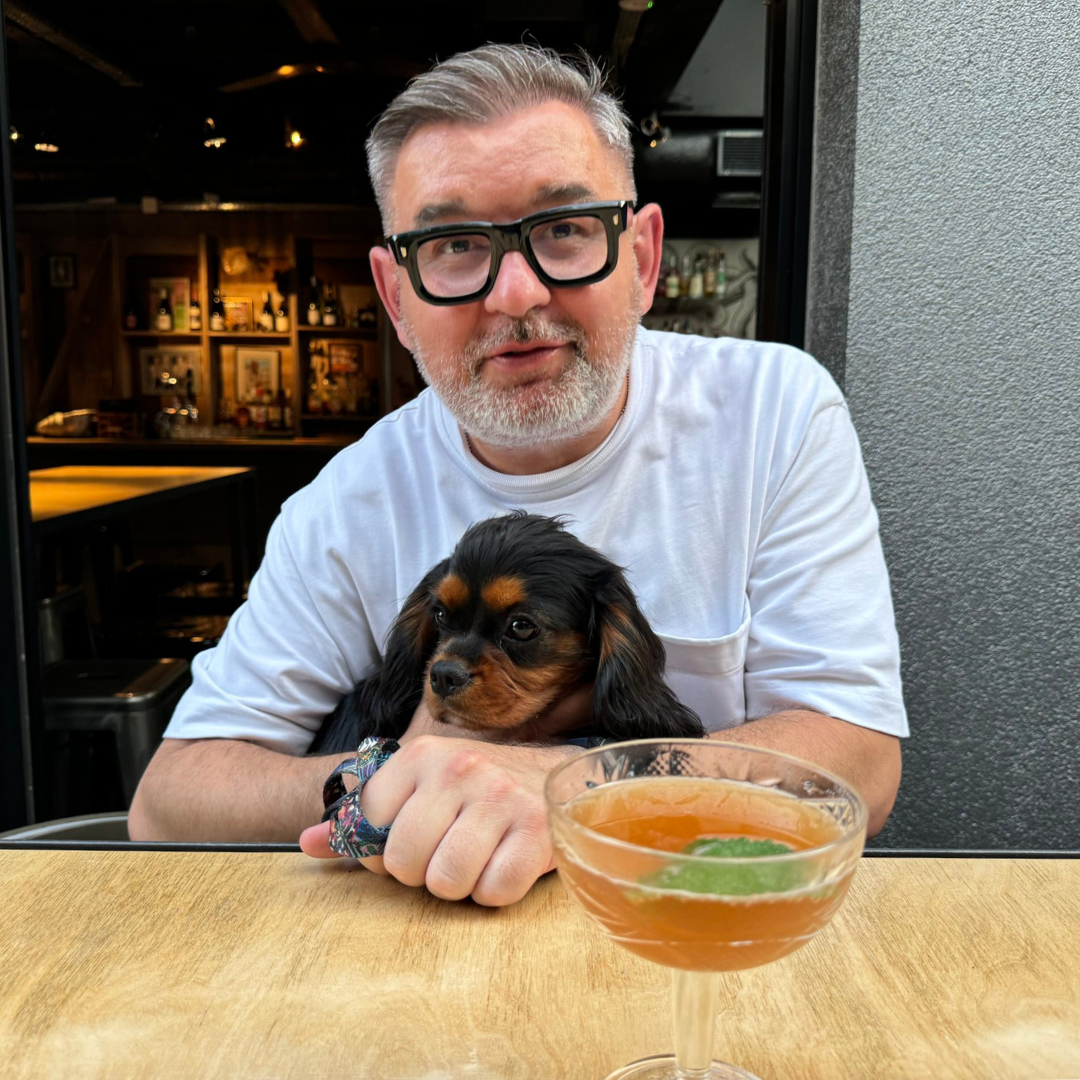
Una was lying on the chaise longue, her head hanging upside down. As befits a purebred Cavalier King Charles Spaniel, she carried within her an aristocratic disdain for human frailties and a profound conviction that her thermal comfort is the highest good in the universe. Her large, dark eyes tracked me with a mixture of pity and absolute superiority.
“Is someone wrong on the internet again, or is it that director of yours who thinks team management is a contest for the loudest monologue?” she asked, without even lifting her head.
“The director,” I replied, massaging my temples. “We just wasted almost an hour of a consulting session so he could protect his illusion of infallibility. He won every verbal skirmish. He leveled every single counterargument I had.”
Una rolled her eyes. She did it with that specific, exasperated grace usually observed in women explaining to men that the dishwasher is not, in fact, a magical portal that empties itself.
“You humans are spectacular,” she stated in her velvety voice. “You are the only species on this planet that prefers being right over having peace of mind. Imagine a wolf that, instead of eating a rabbit, wastes an hour proving to another wolf that his angle of attack was geometrically superior. And then you wonder why, by 4 PM, you need a triple espresso just to remember your own name.”
I had to admit she was right (though I try not to do that too often, as her ego barely fits in our apartment as it is). However, she had hit the nail on the head regarding a problem I encounter almost daily when trying to structure people’s decision-making processes, teach them negotiations, or optimize their personal productivity.
There is a fundamental, incredibly toxic misunderstanding in our culture: we massively confuse confidence with cognitive peace. In the business world, the myth of the hard-nosed negotiator and the infallible leader who never doubts and never yields remains stubbornly alive. The problem is that the need to be “the one who is always right” is not a symptom of confidence at all. It is a symptom of sheer terror.
A person who must be right treats every exchange of views—even a trivial debate about a task-prioritization framework—as a tribunal where they are fighting for epistemological survival. This is why such people are usually terribly, permanently exhausted. Their brains are running at maximum capacity, not to process new information (which would be the foundation of sensible knowledge management), but to serve as the minister of propaganda for their own ego.
The psychological cost of constantly proving your rightness to the world is astronomical. It’s like showing up to every Zoom meeting in full medieval plate armor. Sure, nobody is going to pierce you with a sword, but after two hours, you won’t be able to lift your coffee mug.
In negotiations, this desperate need to be right is your weakest link. A skilled counterpart will quickly sniff it out and gladly hand you the argument with a smile. They will let you win the debate, and in the silence that follows, they will quietly take the margin and the best contract terms. You won’t even notice, too busy basking in your intellectual victory.
“Do you know how much energy it costs to be a dog?” Una spoke up suddenly, stretching lazily and presenting the world with an impressive set of tiny white teeth.
“Judging by the fact that you sleep fourteen hours a day, not much.”
“Incorrect. It costs me exactly as much as I need for digestion, walks, and manipulating you into giving me a piece of cheese. I save the rest for what truly matters.”
She pulled herself up into a sitting position.
“You see, that’s your fundamental architectural flaw. You think your thoughts are you. If someone else’s thought is better, you feel like you are lesser. We dogs have this optimized. When you hide a treat under a cup, and I bark at the wrong cup… I don’t suffer an identity crisis. I don’t try to prove to you that, from the perspective of quantum physics, the treat could have been in both cups at once. I just go check the other cup.”
“Changing your mind in a fraction of a second, without losing face. The definition of cognitive agility,” I muttered.
“The definition of not having a stick up your behind,” Una corrected ruthlessly. “If I were a human who always had to be right, I would be running around the house right now barking at the sofa, proving to it that it was placed in the wrong spot. And then I’d complain to you that I’m overstimulated.”
The highest level of efficiency does not stem from intellectual aggression. It stems from cognitive peace. This is a state where the realization that you are wrong does not trigger an adrenaline spike. You simply treat it as a new data point. True confidence means that changing your mind in light of new facts doesn’t threaten your identity. It’s just a software update. “Oh, I was wrong. Fascinating. How does this change our options?”—that is probably the most powerful sentence one can utter in a boardroom. It is also the ultimate productivity hack in a world where artificial intelligence fact-checks our knowledge in a fraction of a second anyway.
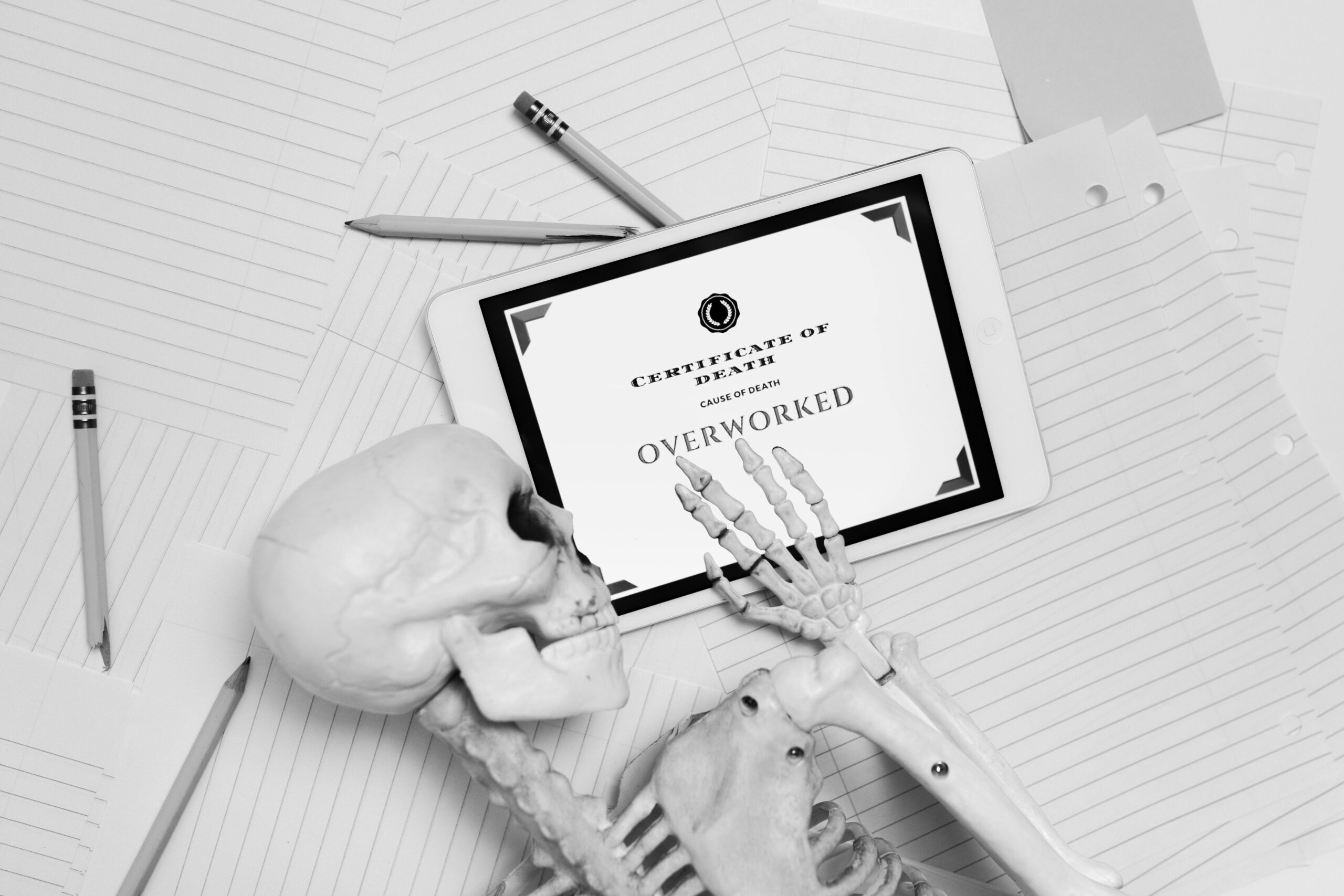
People who always have to be right resemble soldiers trapped in the trenches of a war that ended long ago. The exhaustion they complain about so often, and which drives them to seek time-management consultations, rarely comes from a surplus of objective responsibilities. It comes from the crushing weight of the illusion they must constantly uphold.
“Alright, enough of these existential reflections,” Una barked briefly, jumping off the chaise longue with sudden animation. “We are going to the kitchen. I am right that there is Parma ham in the fridge, and this time, my dear decision-optimization expert, I do not intend to yield a single millimeter.”
“What about your cognitive peace and flexibility?” I asked, closing my laptop.
“My cognitive peace requires ham. And you are going to give it to me right now, because you know it’s the most rational decision you can make,” she tossed over her shoulder, heading toward the door. “Take note. I’ll leave you with this free consultation, but next time, I’m issuing an invoice.”